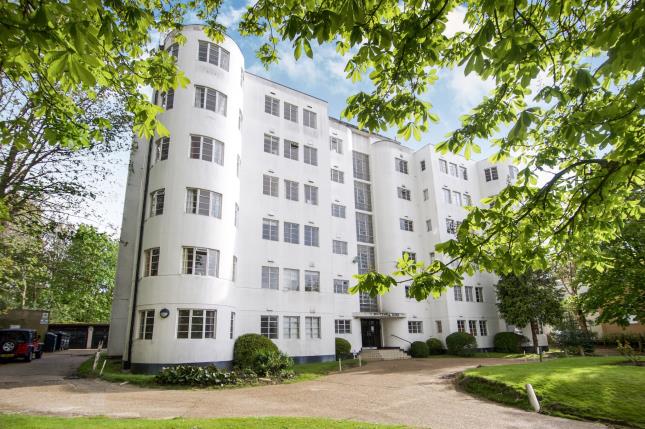
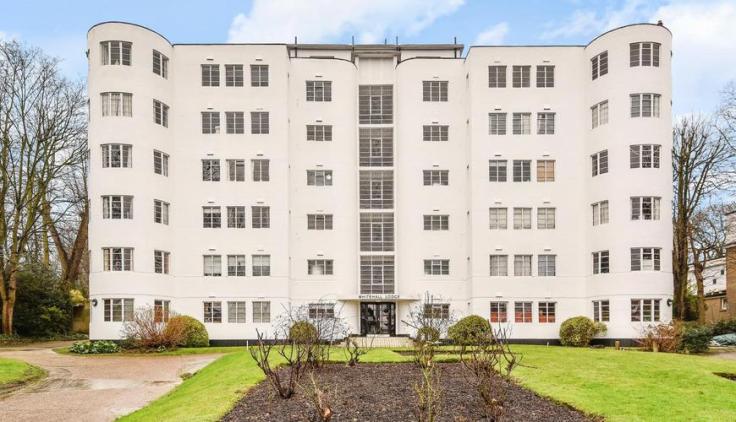
Whitehall Lodge is a historically significant apartment building located on Pages Lane, Muswell Hill in north London. It was constructed in 1936-37 by the English and Scottish Co-Operative (E&S)(1) and represents a rare example of efforts to market Modernist design to suburban residents.
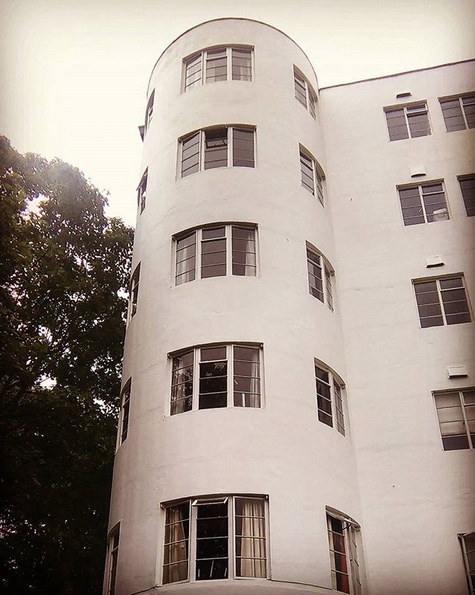
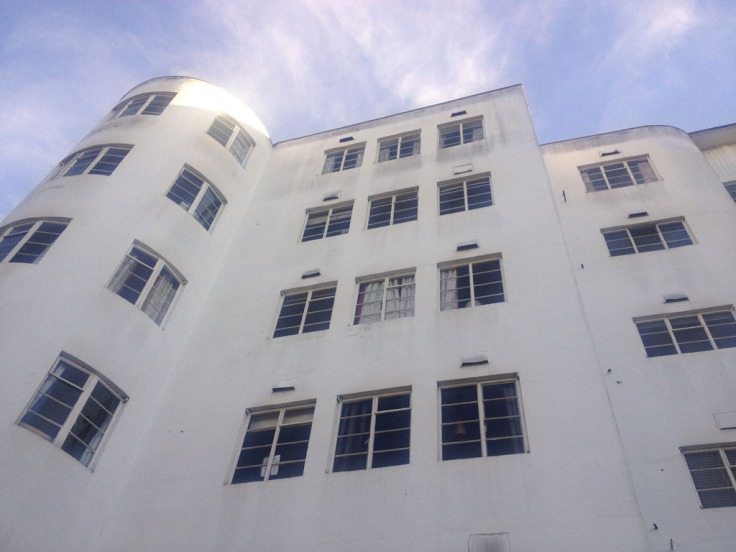
The flats were designed in the ‘Streamline Moderne’ style, an architectural style of the mid-1930s, which, as an evolution of the Modernist and Art Deco styles, placed great emphasis on the clean lines and sweeping sculptural forms which could now be achieved, especially through the use of monolithic reinforced concrete as seen here at Whitehall Lodge. Streamline buildings were deliberately made free of surface detail and decorative elements in order to emphasize the rhythm and proportion of the whole; the wave-like façade of Whitehall Lodge, with its multiple planes and curves held between a striking pair of cylindrical towers, is a fine example of this style. Reinforced concrete was still a new method of building in the 1930s, making Whitehall Lodge an exceptional example of its use in a suburban setting and one of only a very small number of such buildings in the whole of Britain. Even the famous academic and critic Nikolaus Pevsner took pause during his survey of Muswell Hill to note its ‘white and austere’ presence on Pages Lane.
The architect responsible for the original design for Whitehall Lodge was Henry W. Binns of Binns & Scarlett(1). Both Binns and his partner Frank Scarlett had significant experience in the Modernist and Art Deco styles, and had completed many notable projects prior to being commissioned to design Whitehall Lodge in 1935. Binns’ earlier work include the Art Deco Gas Showrooms in Wandsworth and the Chalfont House apartments in Belgravia. Binn’s partner Scarlett had produced one of the earliest Modernist houses in the Britain, Starlock in Rye, which on completion in 1929-30 was only the third building in Britain to be built in the Modernist style. Binns’ T-shape plan for Whitehall Lodge was then enhanced by additions from English & Scottish’s architect Cyril Smith, who added the distinctive towers and balconies we see today, in a manner comparable to those at Ruskin Park House (Champion Hill, South London), then also under development with E&S to designs by Watkins Gray architects.
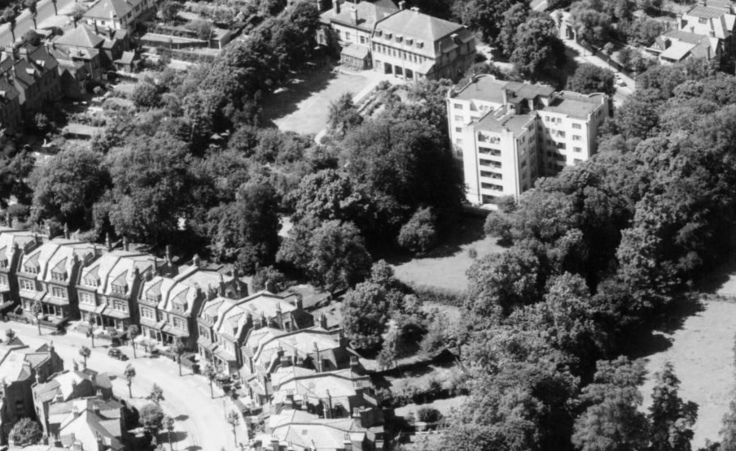 Whitehall Lodge from the air (1947) ©Britain from Above
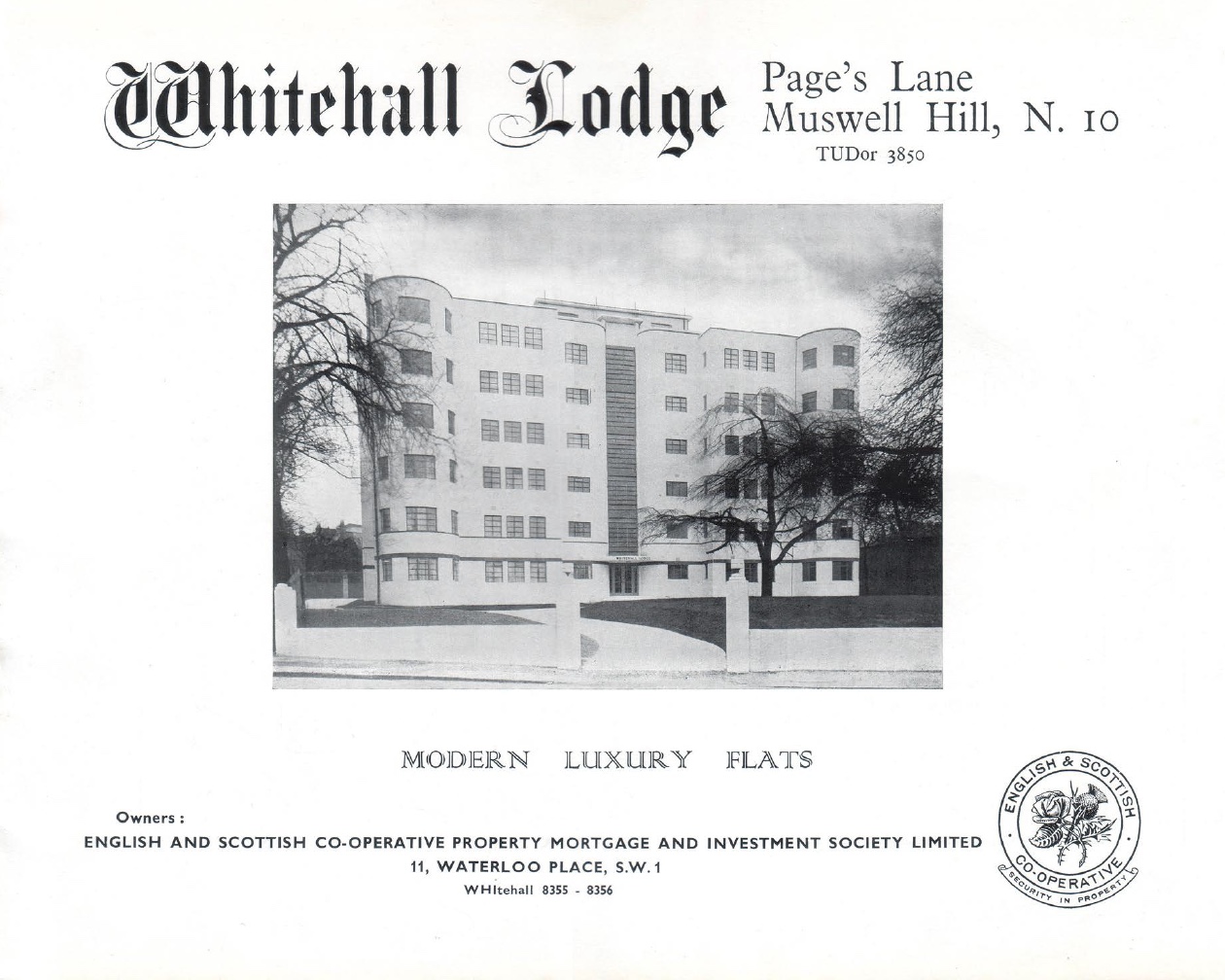
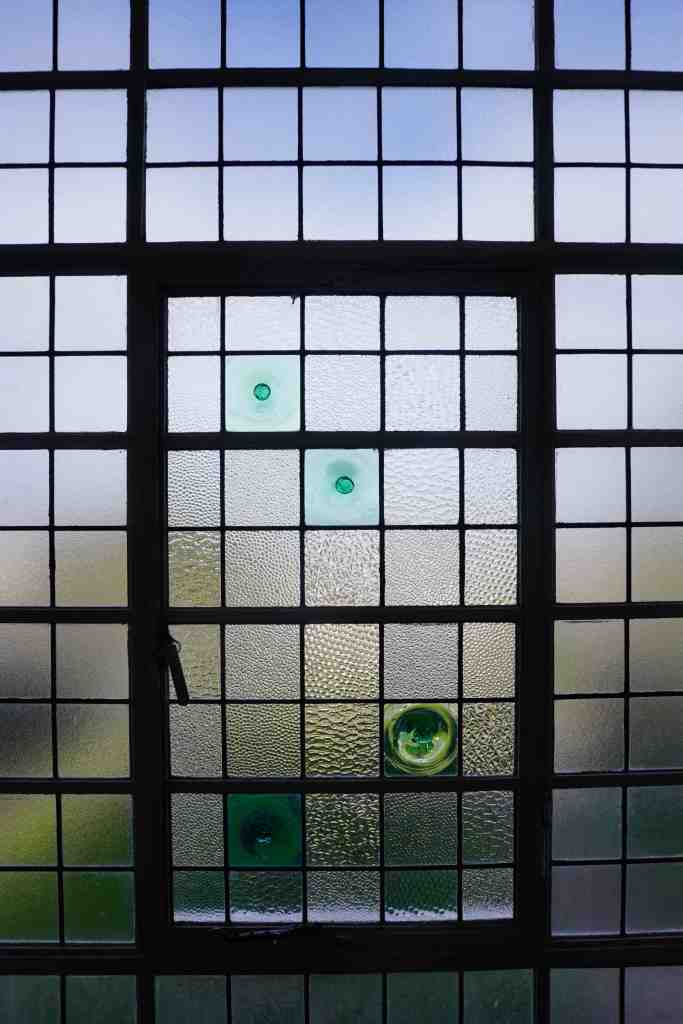
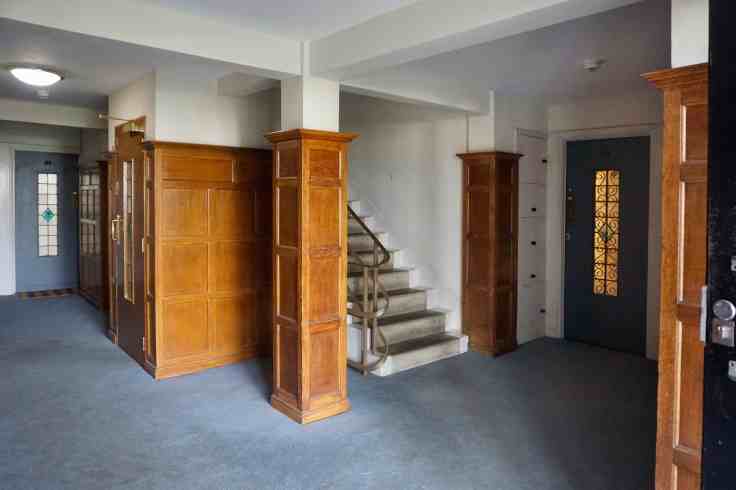
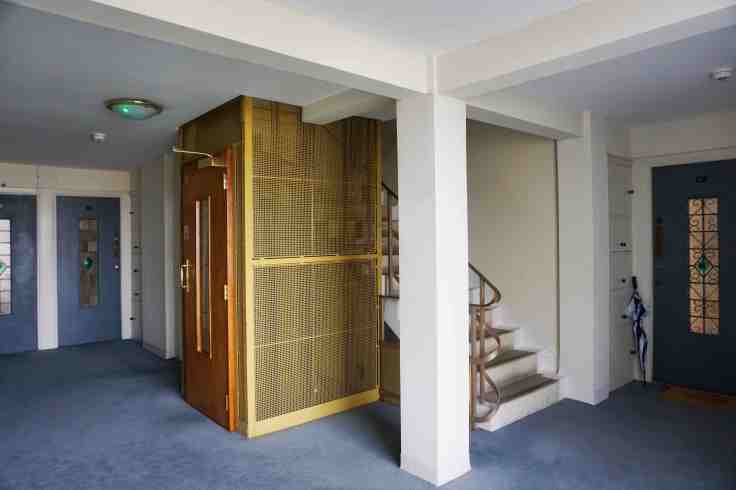
Early residents of Whitehall Lodge were provided with various technologically-advanced facilities, including an all-electric laundry and drying room on the roof, central heating, and an Art Deco style lift, the latter still in service today. The period doors to each of the 36 flats retain their original decorative glass panels and are flanked by a set of discrete ‘trade hatches’, originally provided so that foodstuffs, household rubbish and coal could be delivered or collected without disturbing the occupants. The lobby is wood-panelled at ground floor level and a sweeping brass balustrade leads to the generously proportioned upper landings, which are lit by natural light from a distinctive leaded-glass window bar. This vertical glazing runs the entire height of the building and features thousands of varying textured and coloured glass pieces. Internally, the apartments boasted early examples of fitted kitchens and bathrooms, the latter being half-tiled in yellow, green and black (a scheme closely resembling that at nearby Highgate station). Several examples of the original bathrooms remain in situ. The original sales brochure indicates that the kitchens were supplied with Ismay Zeros electric refrigeration units(2). A private air raid shelter was added at the outbreak of WW2, during which period the flats were marketed as ARP safe due to their concrete structure(3). Notable former residents of the building include Rajani Palme Dutt, founder of the Communist Party of Great Britain and a leading political thinker and author of his day.


In 1976, just 40 years after work commenced on Whitehall Lodge, the building was listed by Haringey Council as a ‘building of merit’ in recognition of its architectural significance and valuable contribution to the character of the local Conservation Area. Since then, its historical significance has naturally increased, as has the public’s appreciation of the merits of Modernist and Art Deco architecture and design. The building is in remarkably original condition and all of the flats retain their original Crittall-style metal window frames. The building is much-loved by its residents who have recently obtained the right to self-manage the building and who are dedicated to preserving it for future generations.
The entry for Whitehall Lodge in Haringey’s Conservation Area Character Appraisal (Area 3 – Muswell Hill, 9.5) reads as follows:
Whitehall Lodge is an impressive ‘T’ shaped six storey block of flats built in the 1930s in an international ‘Modern’ style set well back from the street frontage in landscaped grounds. It is included in the Council’s local list of buildings of merit. The elevation is white painted render stepping forward in a symmetrical series of curved and flat planes from the central full height glazed entrance door and staircase tower surmounted by a small penthouse on the flat roof. The outer, most forward, projections are in the form of full height circular towers. All of the windows retain their original characteristic Crittall metal window frames with horizontal glazing bars.
Whitehall Lodge also features strongly in a group of period buildings within the Conservation Area constructed in the Art Deco and Modernist styles. These include George Coles’ Grade II* listed former Odeon Cinema and a terrace of white-painted Streamline houses at nos. 70 to 78 (even) Tetherdown.
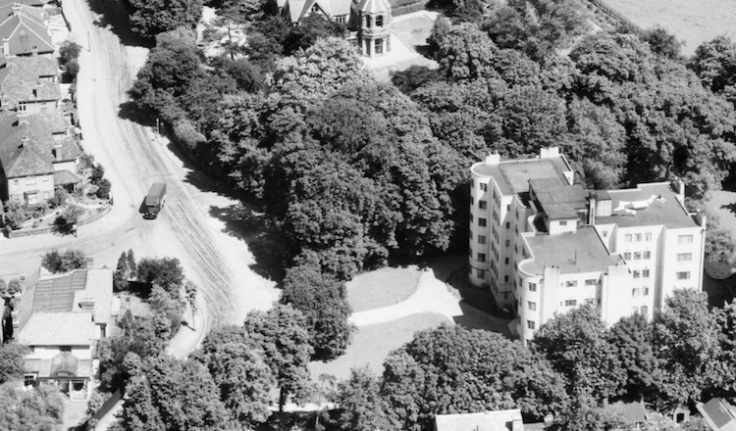 Whitehall Lodge from the air (1947) ©Britain from Above
References
- Haringey Council Building Control, record no. 10,718.
- Original Sales Brochure, English & Scottish Cooperative, 1937.
- Advertisement, The Times, issue 48720, Friday, Sept. 13, 1940.
 M O D E R N I S T TOURISTS
November 19, 2020 at 9:55 am
This is a fabulous building and it would be a travesty to alter, wreck it’s perfect proportions. Good design must surely be protected!
LikeLike
November 19, 2020 at 6:12 pm
Thanks Wendy – we’re doing our best to protect – keep your fingers crossed!
LikeLike
November 23, 2020 at 12:42 am
Perfect cannot be improved, nor should hubris and money override great design !
LikeLike
November 23, 2020 at 9:21 am
We couldn’t agree more Albert. Thanks for your support!
LikeLike
March 20, 2021 at 1:28 am
Heaven forbid those units be added to the roof! I just discovered the issue while sharing online pictures of it and my former elementary school with my two adult children. I lived there for several years when my father (U.S. Navy physician) was stationed in London – approximately 1953-1957. I was thrilled to see how beautifully the complex still is — until I read about that horrific proposal. I hope greed is not allowed to ruin it.
LikeLike
March 25, 2021 at 4:06 pm
How wonderful to hear of your time spent in Whitehall Lodge back in the 50s and thanks for the well wishes. Following the rejection of both planning applications by the local planning department the freeholder is now taking things to an appeal. As this appeal has been delayed somewhat due to the pandemic we’re in a dreadful limbo at the moment.
LikeLike
May 17, 2021 at 2:24 am
The building was built in the 1930s in reinforced concrete and I, as a Japanese, think it is very beautiful and valuable. Please don’t destroy it. Please don’t destroy it, please repair it and keep it in use. If you destroy it, it will be a disgrace to Britain.
LikeLike
May 17, 2021 at 8:52 am
Hi Shoji, thanks for your support! If you could also email your comment to north1@planninginspectorate.gov.uk and quote reference numbers APP/Y5420/W/21/3266860 and APP/Y5420/W/21/3266863 we would really appreciate it. THANK YOU!
LikeLike